Abstract
This paper explores how artificial intelligence is transforming engagement with cultural heritage from static preservation toward interactive knowledge production. Drawing on media-historical perspectives, it proposes the concept of knowledge liberation to interpret successive stages in the evolution of knowledge environments, from oral transmission and print culture to digital networks and AI-mediated interaction. Within this framework, cultural knowledge becomes progressively less constrained by the material conditions of its transmission. The paper examines several AI-enabled platforms developed at Peking University that support large-scale digitisation, structured data extraction, knowledge-graph construction, and multimodal cultural content generation. It argues that AI is emerging as a new knowledge medium that reshapes research methodologies, expands modes of cultural representation, and strengthens connections between humanities scholarship and public knowledge production.
-
Keywords: artificial intelligence, digital humanities, cultural heritage, knowledge media, public humanities
1. INTRODUCTION
Cultural heritage has long been regarded as a repository of collective memory, intellectual traditions, and civilisational identity. Among its most important carriers are textual artefacts such as ancient books, manuscripts, inscriptions, and historical documents. For centuries, humanities scholarship has centred on the preservation, interpretation, and dissemination of such materials. However, the ways in which cultural knowledge is accessed, represented, and experienced have always been shaped by the prevailing media environment (
Ong 1982).
The emergence of digital humanities marked a major transformation in this regard. Through digitisation, large-scale textual corpora became accessible to global audiences, enabling new forms of computational analysis and scholarly collaboration (
Svensson 2016). Yet digital transformation alone did not fundamentally alter the epistemic form of cultural knowledge. In most cases, digitised heritage resources remained static representations of textual content, albeit more searchable and widely distributed.
Recent advances in artificial intelligence—particularly large language models and multimodal generative systems—signal a further shift. These technologies not only facilitate the processing and retrieval of cultural data but also enable new forms of interaction, interpretation, and creative re-expression. Cultural heritage can now be explored through conversational interfaces, visualised through generative imagery, reconstructed in immersive environments, and analysed by autonomous research agents (
Harisanty et al. 2024). This transformation suggests that artificial intelligence is not merely a new tool for humanities research, but rather a new knowledge medium that reshapes the relationship between human users and historical knowledge.
This paper investigates how artificial intelligence is transforming engagement with cultural heritage, shifting it from static preservation toward forms of intelligent interaction. Drawing on theoretical perspectives from media history and knowledge studies, it introduces the concept of “knowledge liberation” as a framework for understanding successive stages of media transformation. In this context, “knowledge liberation” refers to the historical process through which cultural knowledge becomes progressively less constrained by the material, spatial, and representational limitations of the media through which it is produced, transmitted, and experienced. Building on this framework, the paper analyses how AI-enabled platforms developed at Peking University operationalise these transformations in practice, enabling scholars and the public to construct knowledge graphs, generate multimodal cultural content, and participate in collaborative reinterpretation of historical resources. It concludes by discussing the broader implications of AI-mediated cultural engagement for the future of humanities research and public knowledge production.
2. MEDIA TRANSFORMATION AND THE THREE LIBERATIONS OF KNOWLEDGE
The history of cultural knowledge transmission can be understood as a sequence of transformations shaped by changes in media technologies. Each transformation alters not only the material form of knowledge but also its epistemological status, accessibility, and modes of interpretation. In this sense, media history is inseparable from the history of intellectual practice.
The first major transformation occurred with the transition from oral transmission to writing and print. In oral cultures, knowledge was preserved through memory and embodied performance (
Ong, 1982). Intellectual authority was closely tied to lineage and personal transmission. The emergence of writing systems and later the development of printing technologies enabled knowledge to be externalised from the human mind and stabilised in textual form. This shift liberated knowledge from the constraints of memory and allowed it to circulate across wider geographical and temporal horizons. Books became enduring repositories of intellectual tradition, facilitating systematic scholarship and the accumulation of cultural memory (
Manovich, 2001).
A second transformation followed with the rise of digital and networked media in the late twentieth century. Cultural texts were encoded into electronic formats and disseminated through global information infrastructures. Digitisation liberated knowledge from the limitations of physical carriers such as manuscripts and printed volumes. Scholars could now access large corpora remotely, conduct computational analyses, and collaborate across national boundaries (
Barbecho et al. 2023). Digital humanities emerged as an interdisciplinary field that leveraged computational tools to study humanistic data at scale. Nevertheless, digital representations largely preserved the textual ontology of cultural heritage. They enhanced accessibility and analytical capacity but did not fundamentally transform how knowledge was experienced.
The current emergence of artificial intelligence introduces a third stage of transformation. Generative AI systems enable knowledge to move fluidly across representational forms, including text, image, audio, video, and interactive simulation. Cultural knowledge is no longer bound to a fixed mode of representation (
Wang & Lu 2026). Historical narratives can be reconstructed through conversational agents; textual descriptions can be translated into visual or immersive experiences; structured data extracted from texts can support automated reasoning and research workflows (
Schich et al. 2014). In this sense, AI can be understood as liberating knowledge from representational fixity, allowing it to become adaptive, responsive, and participatory.
This third “liberation of knowledge” marks a shift from static information environments to intelligent information ecosystems. Rather than merely storing or transmitting cultural content, AI-mediated systems actively participate in its interpretation and reconfiguration. Users engage not only as readers or viewers but also as co-creators of cultural meaning. Such transformations have profound implications for humanities scholarship, educational practice, and public cultural participation. Understanding these implications requires examining both the theoretical foundations and the practical implementations of AI-driven cultural heritage platforms.
3. FROM STATIC KNOWLEDGE TO INTELLIGENT CULTURAL INTERACTION
The transformation introduced by artificial intelligence is not limited to improving the efficiency of cultural heritage preservation or scholarly research. More fundamentally, AI reshapes the epistemic form through which historical knowledge is organised, accessed, and experienced. Whereas previous media transformations primarily altered the storage and transmission of knowledge, AI enables dynamic interaction with cultural content. This shift marks a transition from static knowledge environments to intelligent cultural interaction.
In traditional textual scholarship, knowledge embedded in ancient books is accessed through close reading, annotation, and interpretative synthesis. Even in digital humanities contexts, where large corpora can be searched and analysed computationally, the primary unit of engagement remains the document. Cultural heritage resources are typically presented as digitised images or transcribed texts, preserving the linear and relatively fixed structure of the original artefact. While such representations expand accessibility and analytical scope, they do not fundamentally alter the experiential relationship between the user and historical knowledge.
AI technologies introduce new representational and interactive possibilities. Through natural language processing and generative modelling, textual content can be transformed into structured data, such as tables that extract entities, events, and relationships. These structured representations can then be expanded into knowledge graphs that visualise complex historical networks (
Pratelli et al., 2023). By integrating reasoning capabilities and conversational interfaces, AI agents can operate on these knowledge structures to answer research questions, generate hypotheses, or simulate historical perspectives. The result is an environment in which cultural knowledge becomes navigable, dialogical, and adaptable to diverse research need.
Furthermore, multimodal generative systems enable cultural content to be re-expressed across media forms. Descriptive passages in historical texts can be translated into visual scenes, animated narratives, or immersive simulations. Conversely, visual artefacts such as paintings or architectural remains can be interpreted through automatically generated textual descriptions and contextual narratives. These processes expand the communicative range of cultural heritage, making it accessible not only to specialised scholars but also to broader publics with varying levels of domain expertise.
Such developments contribute to the emergence of participatory cultural knowledge production. Users are no longer limited to consuming digitised resources; they can actively construct new representations, reinterpret historical materials, and share their outputs within collaborative platforms. In this sense, AI-mediated environments foster a shift from knowledge consumption to knowledge co-creation. This transformation aligns with broader trends in public humanities, where engagement, creativity, and experiential learning are increasingly emphasised alongside traditional scholarly practices (
Bansod et al. 2026).
At the same time, intelligent cultural interaction raises important methodological and epistemological questions. The interpretative flexibility enabled by AI may blur the boundaries between historical reconstruction and imaginative re-creation. Issues of authenticity, authority, and evidential transparency become more complex when cultural knowledge is mediated through generative systems (
Ossewaarde 2026). These challenges highlight the need for critical frameworks that guide the responsible design and use of AI technologies in humanities research.
Understanding this transition from static knowledge to intelligent interaction thus requires examining not only theoretical implications but also concrete technological infrastructures. The following section presents a set of AI-enabled platforms developed to operationalise this transformation in the context of cultural heritage research and public engagement.
4. AI PLATFORMS FROM CULTURAL HERITAGE RESEARCH AND ENGAGEMENT
To operationalise the transition from static knowledge environments to intelligent cultural interaction, a series of AI-enabled platforms have been developed at the Digital Humanities Center of Peking University. These platforms aim to support the full lifecycle of cultural heritage knowledge transformation—from digitisation and structuring to analysis, creative reinterpretation, and public dissemination. Together, they form an integrated ecosystem that illustrates how artificial intelligence can function as an infrastructural medium for humanities scholarship.
4.1. From Digitisation to Public Digital Assets: The Shidian Guji (口典古籍) Platform
The first stage of the ecosystem focuses on the large-scale digitisation, intelligent processing, and public dissemination of ancient Chinese books. The Shidian Guji (口典古籍) platform is a non-profit digital humanities initiative jointly developed by the Digital Humanities Center at Peking University and ByteDance Philanthropy (
https://www.shidianguji.com). In this collaboration, PKU provides curated classical text resources and scholarly processing workflows, while ByteDance engineering teams contribute to system development, artificial intelligence integration, and platform operation.
Since its launch in 2022, the platform has made more than 47,000 classical works openly accessible to the public. It has rapidly grown into one of the largest open-access digital collections of premodern Chinese texts. The platform now serves over 2.4 million users per month across multiple access channels, with approximately 350,000 daily search interactions and total visits exceeding 147 million. These figures indicate not only the scale of the digital collection but also the expanding societal demand for accessible cultural knowledge.
Importantly, Shidian Guji functions not merely as an online reading interface for digitised heritage materials but as an AI-enabled infrastructure for the intelligent organisation of classical texts. The platform supports an integrated workflow that covers multiple stages of textual processing, including optical character recognition for historical scripts, automated punctuation insertion, named-entity recognition, semantic structuring, and modern-vernacular translation assistance. By automating key steps in the preparation and interpretation of premodern texts, the system lowers technical and disciplinary barriers that traditionally restricted classical scholarship to specialists. As a result, non-expert users can actively participate in the annotation, organisation, and reinterpretation of cultural heritage materials.
Through these capabilities, Shidian Guji transforms rare and geographically dispersed textual artefacts into dynamic public cultural assets. In the conceptual framework proposed in this paper, this stage represents the consolidation of the digital transformation of knowledge media, in which cultural knowledge becomes progressively less constrained by the material limitations of physical carriers and increasingly embedded within global information networks. The platform thus provides the foundational layer for subsequent stages of intelligent cultural engagement, enabling structured analysis, agent-based research workflows, and multimodal creative reinterpretation.
4.2. Structuring Cultural Knowledge and Building Research Agents: The WuYuDian (吾与点) Platform
While large-scale digitisation significantly enhances access to cultural heritage resources, the transition toward AI-mediated knowledge environments requires a further transformation: the conversion of heterogeneous humanities materials into machine-processable, structured knowledge. The WuYuDian (吾与点) platform is conceived as a foundational research infrastructure for humanities scholarship in intelligent environments (
https://www.wuyudian.net) . Its core capability lies in transforming raw cultural materials— including textual documents, scanned images, facsimiles, and PDF sources—into structured, computationally operable data.
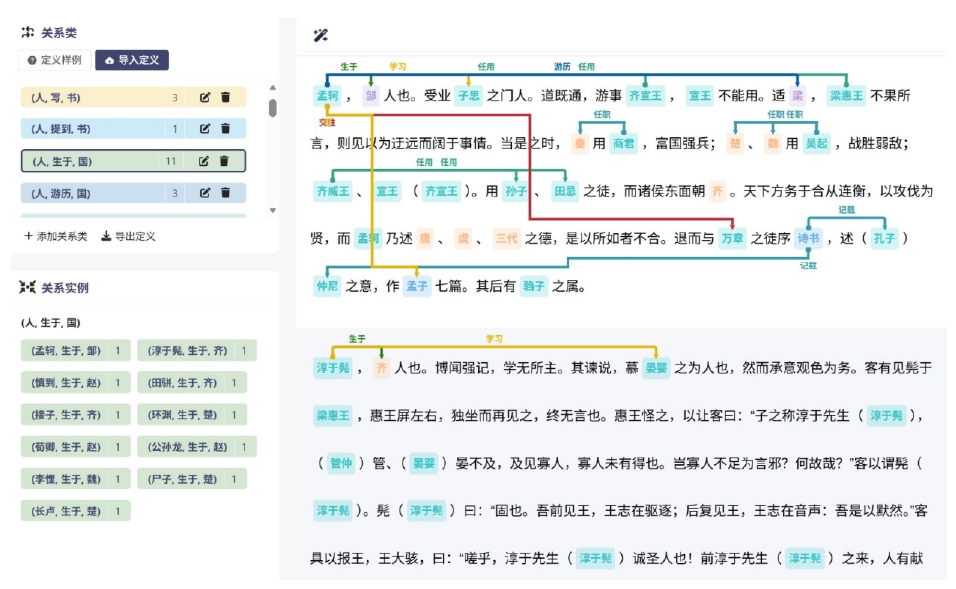
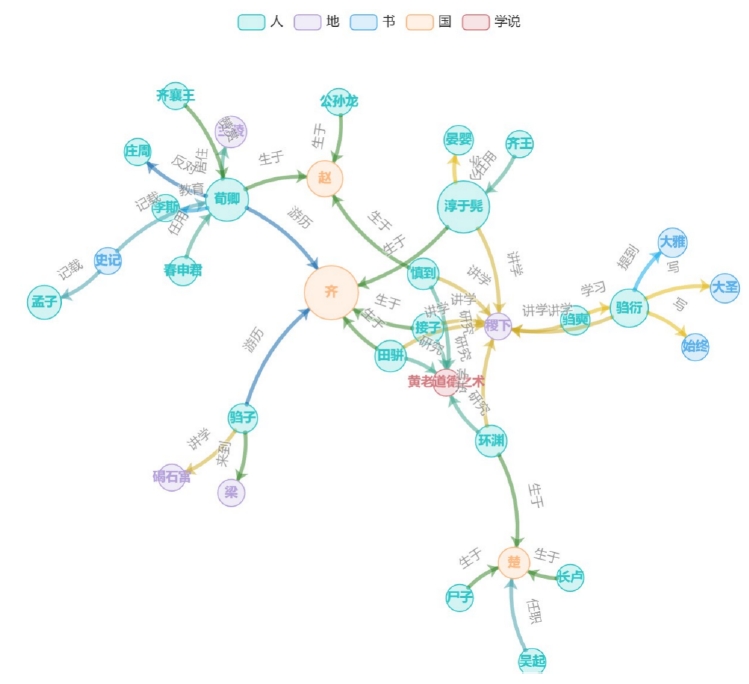
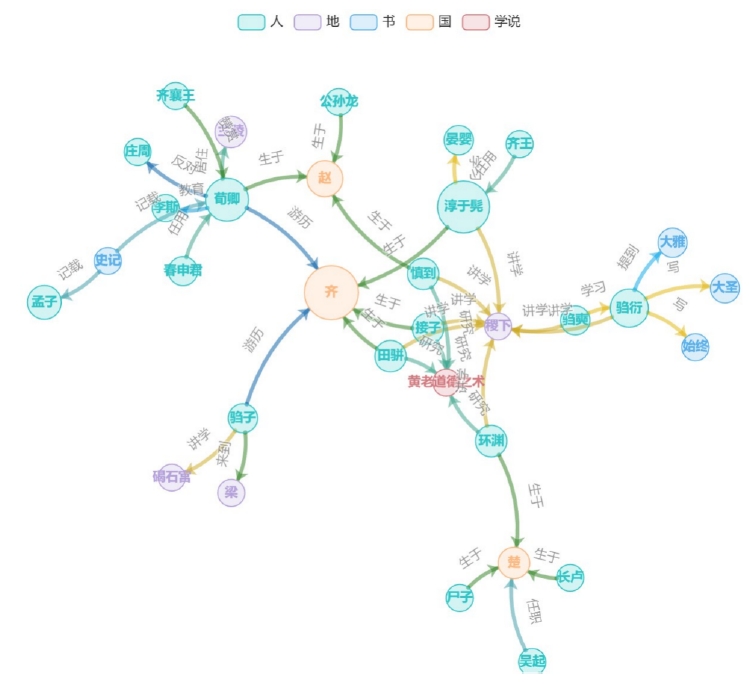
The platform supports multimodal information extraction, enabling users to automatically identify entities, relationships, events, and thematic elements across diverse input formats. Extracted information can be organised into structured tables and subsequently transformed into visual knowledge graphs through a streamlined workflow. These knowledge graphs can be exported to analytical environments such as Gephi or ArcGIS, facilitating network analysis, spatial humanities research, and advanced data visualisation.
A distinctive feature of WuYuDian is its model-agnostic architecture. Users may invoke a wide range of mainstream large language models—including ChatGPT, Gemini, Claude, DeepSeek, Doubao, and Qwen—to perform analytical and generative tasks. In principle, the platform can process materials in any language supported by contemporary large language models, enabling comparative research across linguistic and cultural traditions.
Unlike general-purpose AI interfaces that primarily operate on publicly available knowledge, WuYuDian is designed to function within user-defined private research environments. Scholars can upload curated datasets and construct customised AI research agents that operate directly on their own corpora. Through natural-language interaction, these agents can conduct intelligent question answering, quantitative analysis, statistical visualisation, geographic mapping, and automated report generation. This capability allows researchers to build domainspecific analytical workflows while maintaining control over their data.
Such workflows exemplify a shift toward what may be termed agentic scholarship, in which human researchers collaborate with AI systems that function as cognitive extensions rather than replacements for scholarly interpretation (
Ma et al. 2026). By accelerating data processing and enabling large-scale pattern recognition, these agents expand both the methodological repertoire and the epistemic scope of humanities inquiry.
Originally developed to support the organisation and analysis of classical Chinese texts, the platform has evolved into a multilingual research environment capable of processing modern Chinese, English, and other languages. In theoretical terms, WuYuDian illustrates the transition to AI-mediated knowledge environments discussed in this paper. By transforming textual heritage into structured knowledge representations and interactive research agents, the platform enables adaptive, dialogical, and computationally supported engagement with historical materials. Cultural knowledge thus becomes not only searchable and accessible but dynamically operable within intelligent research workflows.
Complementing the analytical capabilities of WuYuDian, the Yuanjing (原境) project explores the creative potential of generative AI for cultural heritage interpretation (
https://yuanjingzs.pkudh.net/). This platform enables users to generate visual artworks inspired by classical Chinese aesthetics, such as paintings in the style of the Tang or Song dynasty, based on textual prompts or historical references.
Through such multimodal translation, textual descriptions preserved in ancient sources can be reimagined as visual scenes, immersive narratives, or interactive experiences. This process expands the expressive range of cultural heritage, allowing historical knowledge to be communicated through forms that resonate with contemporary audiences. It also supports experimental pedagogy and public outreach by providing accessible entry points into complex cultural traditions (
Chang et al. 2024).
Together, these platforms illustrate a continuum of transformation: from digitised preservation to structured knowledge construction and finally to generative reinterpretation. They demonstrate how AI technologies can integrate analytical rigour with creative exploration, enabling both scholars and non-specialists to participate in the reinterpretation of cultural heritage.
4.4. Toward an Integrated Intelligent Cultural Infrastructure
When considered collectively, the Shidian Guji, WuYuDian, and Yuanjing platforms constitute more than isolated technological tools. They represent components of an emerging intelligent cultural infrastructure that supports the production, circulation, and experiential engagement of humanities knowledge. By linking digitised corpora with structured representations, research agents, and multimodal creative outputs, this ecosystem facilitates new forms of scholarly workflow and public participation (
Wang et al. 2024).
Such infrastructural development suggests that the future of digital humanities lies not only in computational analysis but also in the design of interactive knowledge environments. Artificial intelligence thus becomes a mediating layer that connects historical resources, scholarly practices, and cultural creativity within a unified technological framework.
5. PARTICIPATORY AI AND PUBLIC HUMANITIES: CULTURAL HERITAGE CREATIVITY COMPETITIONS AS EXPERIMENTAL ECOSYSTEMS
Beyond the development of AI-enabled research infrastructures, the transformation of humanities scholarship in intelligent environments increasingly unfolds through participatory forms of cultural production. One important example is the “Rebirth of Cultural Heritage: AI Creative Competition,” jointly organised by the Digital Humanities Center at Peking University and the Capital Library of Beijing within the framework of the Annual International Conference on Digital Humanities for East Asia Classics (
https://DHEAC.org). This initiative provides an experimental platform for exploring how artificial intelligence can facilitate new modes of engagement with cultural heritage resources.
The competition makes a curated selection of digitised heritage materials available to participants, including rare ancient books, classical paintings, and historical rubbings sourced from major library collections. By opening access to these materials and encouraging creative reinterpretation through AI technologies, the initiative seeks to move beyond traditional preservation-oriented approaches toward participatory cultural innovation. Participants are invited to develop works that reinterpret historical knowledge through generative AI, interactive media, and immersive design.
Two broad categories of submissions are encouraged. The first focuses on AI-generated artistic creations, such as visual works, animations, and short videos produced with generative models. The second emphasises interactive and narrative cultural products, including educational games, digital exhibitions, and mixed-media storytelling experiences. These formats reflect the growing convergence of humanities research, digital design, and computational creativity, demonstrating how cultural heritage can be transformed into experiential and socially engaging forms.
Importantly, the competition also functions as a learning ecosystem. Participants receive methodological guidance and technical training in areas such as heritage interpretation, interaction design, and the use of AI creative tools. This support structure enables contributors from diverse backgrounds—including students, researchers, designers, and members of the public—to participate in the reinterpretation of historical materials. The evaluation criteria further reflect a balanced emphasis on historical relevance, cultural creativity, technical feasibility, and social impact.
Selected works are presented through public exhibitions and online showcases (
https://aicreative-2025.pkudh.net), allowing audiences to experience AI-mediated cultural heritage in interactive and visual formats. The final award-winning submissions are publicly accessible through the competition website, providing concrete examples of how historical materials can be reinterpreted through generative and immersive media. In this way, the competition extends the scope of digital humanities beyond scholarly analysis toward broader cultural communication and public education. It demonstrates how intelligent technologies can support collaborative knowledge production, interdisciplinary experimentation, and new forms of cultural participation.
From a theoretical perspective, such initiatives illustrate the emergence of AI-mediated public humanities ecosystems. Cultural heritage resources are no longer confined to archival preservation or academic interpretation; instead, they become catalysts for collective creativity and technological exploration. These participatory experiments provide valuable insights into how artificial intelligence reshapes the circulation, representation, and experiential understanding of historical knowledge in contemporary society.
6. DISCUSSION: ARTIFICAL INTELLIGENCE AS KNOWLEDGE INFRASTRUCTURE — OPPORTUNITIES AND CHALLENGES
The developments described above suggest that artificial intelligence is evolving into a foundational layer of knowledge infrastructure for the humanities. Beyond functioning as analytical tools or creative assistants, AI systems increasingly mediate how cultural knowledge is organised, interpreted, and experienced. This infrastructural role has far-reaching implications for scholarly practice, epistemic authority, and the public understanding of cultural heritage.
One significant opportunity lies in the expansion of research scale and scope. AI-driven structuring of historical corpora allows scholars to navigate vast corpora, identify patterns across temporal and geographical contexts, and generate new research questions. Knowledge graphs and agent-based analytical workflows make it possible to integrate textual, spatial, and visual data within unified research environments. Such developments support the emergence of what may be termed “intelligent scholarship,” in which human interpretation is augmented by computational reasoning and multimodal synthesis (
Kulkarni et al. 2024).
Artificial intelligence also contributes to the diversification of knowledge representation. By enabling the transformation of historical content into visualisations, simulations, and interactive narratives, AI broadens the communicative reach of humanities research. Cultural heritage can thus be shared with wider audiences through experiential formats that complement traditional scholarly publications. This shift aligns with the growing emphasis on public humanities and the societal relevance of academic research.
At the same time, the integration of AI into cultural knowledge systems raises important challenges. Generative models may produce outputs that appear plausible yet lack historical accuracy or evidential grounding (
Bender et al. 2021). When such outputs circulate widely, they risk reshaping public perceptions of the past in ways that are difficult to verify. The interpretative flexibility afforded by AI-mediated representation may blur distinctions between reconstruction, interpretation, and creative speculation. Maintaining transparency about data sources, model limitations, and methodological assumptions becomes crucial for preserving scholarly integrity.
Ultimately, the transition toward AI-mediated knowledge environments invites a rethinking of the aims and practices of humanities scholarship. Rather than viewing artificial intelligence as a replacement for human interpretation, it may be more productive to conceptualise it as a collaborative medium that expands the horizons of cultural inquiry. By integrating analytical rigour, creative exploration, and public engagement, AI has the potential to foster a more dynamic and inclusive intellectual ecosystem. Realising this potential, however, depends on sustained critical reflection and interdisciplinary dialogue.
7. CONCLUSION
This paper has argued that artificial intelligence represents a new stage in the historical evolution of knowledge media, transforming the ways in which cultural heritage is preserved, interpreted, and experienced. By situating AI within a longer trajectory of media transformations—from orality to print, from print to digital networks—it proposes the concept of “knowledge liberation” as a framework for understanding how successive technological environments reshape intellectual practice.
Unlike earlier transformations that primarily expanded the storage and transmission of cultural knowledge, AI introduces new possibilities for intelligent interaction. Through structured data extraction, knowledge graph construction, agent-based research workflows, and multimodal generative expression, historical materials can be transformed into dynamic knowledge environments. These developments enable both scholars and broader publics to engage more actively with cultural heritage, fostering new forms of participatory interpretation and creative production.
The platforms and initiatives discussed in this paper illustrate how AI can function as an infrastructural medium for humanities research. By integrating digitisation, computational analysis, and generative creativity within a unified ecosystem, such systems support the emergence of intelligent cultural engagement. At the same time, the expansion of AI-mediated knowledge environments raises important methodological, epistemological, and ethical questions concerning historical accuracy, interpretative authority, and equitable access.
Future research in the humanities and artificial intelligence should therefore focus not only on technological innovation but also on the development of critical frameworks that guide responsible implementation. As AI continues to evolve, its role in shaping cultural knowledge production will become increasingly significant. Understanding this transformation is essential for ensuring that the humanities remain both intellectually rigorous and socially relevant in an era of intelligent information systems.
Figure 1The Automatic Extraction of Semantic Relationships in Wuyudian Platform
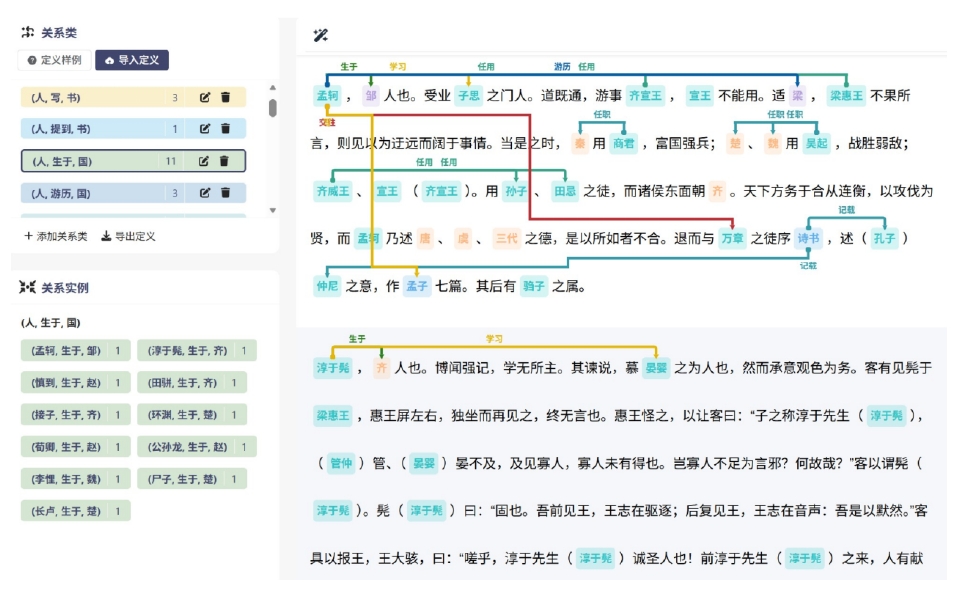
Figure 2The Knowledge Graph Automatic Generated in Wuyudian Platform
REFERENCES
- Bansod, Hemant, and , et al. 2026. “Generative AI for Reviving Lost Art Traditions”. ShodhKosh: Journal of Visual and Performing Arts 7 (1s): 294-304. https://doi.org/10.29121/shodhkosh.v7.i1s.2026.7084
- Barbecho, L. B, and , et al. 2023. “Digital Humanities at Global Scale”. Interdisciplinary Science Reviews 48 (3): 446-459. https://doi.org/10.1080/03080188.2023.2193799
- Bender, Emily M., et al. 2021. “On the Dangers of Stochastic Parrots: Can Language Models Be Too Big?” In Proceedings of the 2021 ACM Conference on Fairness, Accountability, and Transparency (FAccT ’21), 610–623. New York: Association for Computing Machinery.
- Chang, L, and , et al. 2024. “SikuGPT: A Generative Pre-trained Model for Intelligent Information Processing of Ancient Texts from the Perspective of Digital Humanities”. Journal on Computing and Cultural Heritage 17 (4): 1-17.
- Harisanty, D, and , et al. 2024. “Cultural Heritage Preservation in the Digital Age: Harnessing Artificial Intelligence for the Future”. Digital Library Perspectives 40 (4): 609-630.
- Kulkarni, M, and , et al. 2024. “The Future of Research in an Artificial Intelligence-Driven World”. Journal of Management Inquiry 33 (3): 207-229.
- Ma, R, and , et al. 2026. “A Dancing Bear, a Colleague, or a Sharpened Toolbox? The Cautious Adoption of Generative Artificial Intelligence Technologies in Digital Humanities Research”. Journal of the Association for Information Science and Technology 1-19. https://doi.org/10.1002/asi.70066
- Manovich, Lev. 2001. The Language of New Media. Cambridge, MA: MIT Press.
- Ong, Walter J. 1982. Orality and Literacy: The Technologizing of the Word. London: Routledge.
- Ossewaarde, M, and , et al. 2026. “The Mechanical Reproduction of Symbolic Violence: AI as a Cultural Discourse”. Journal of Multicultural Discourses 1-10. https://doi.org/10.1080/17447143.2026.2635229
- Pratelli, Niccolò, Emanuele Lenzi, and Valentina Bartalesi. 2023.“Connecting Cultural Heritage Through Knowledge Graphs: A Case Study on Medieval Manuscripts.” In International Joint Conference on Knowledge Graphs, 494-508. Heraklion, Greece.
- Schich, Maximilian, and , et al. 2014. “A Network Framework of Cultural History”. Science 345 (6196): 558-562.
- Svensson, Patrik, and , et al. 2016. “Big Digital Humanities”. Digital Humanities Quarterly 10 (4.
- Wang, J, and , et al. 2024. “Evol Project: A Comprehensive Online Platform for Quantitative Analysis of Ancient Literature”. Humanities and Social Sciences Communications 11 (1): 1-13.
- J, Wang, and Lu Y. 2025. Agentic Media: Reimagining the Future of Communication. Technical Report MSR-TR-2025-62. Redmond, WA: Microsoft.